
JunkTok Wiki
JunkTok
Released Aug. 31, 2026. Start with the beginner guide, then move into EyeAI scans, viewer ranking, characters, perks, upgrades, and achievements.
Quick start
Start after the tutorial
New players should move from tutorial basics into the first playable route: choose a character, check the perk or upgrade state, scan the objective, identify an EyeAI target, and keep viewer ranking visible through all five nights.
How to Play
Post-tutorial route, first objective, scan order, and five-night survival priorities.
Characters & Perks
Character ability, random perk, upgrades, modifiers, and build notes to record before ranking.
EyeAI Guide
Confirmed scan targets: Creatures, Slime, and Portals, with evidence fields for safe route testing.
Viewer Ranking
Donation requests, audience movement, ranking pressure, and what to watch after each scan.
Wiki guide hub
Find the answer by player task
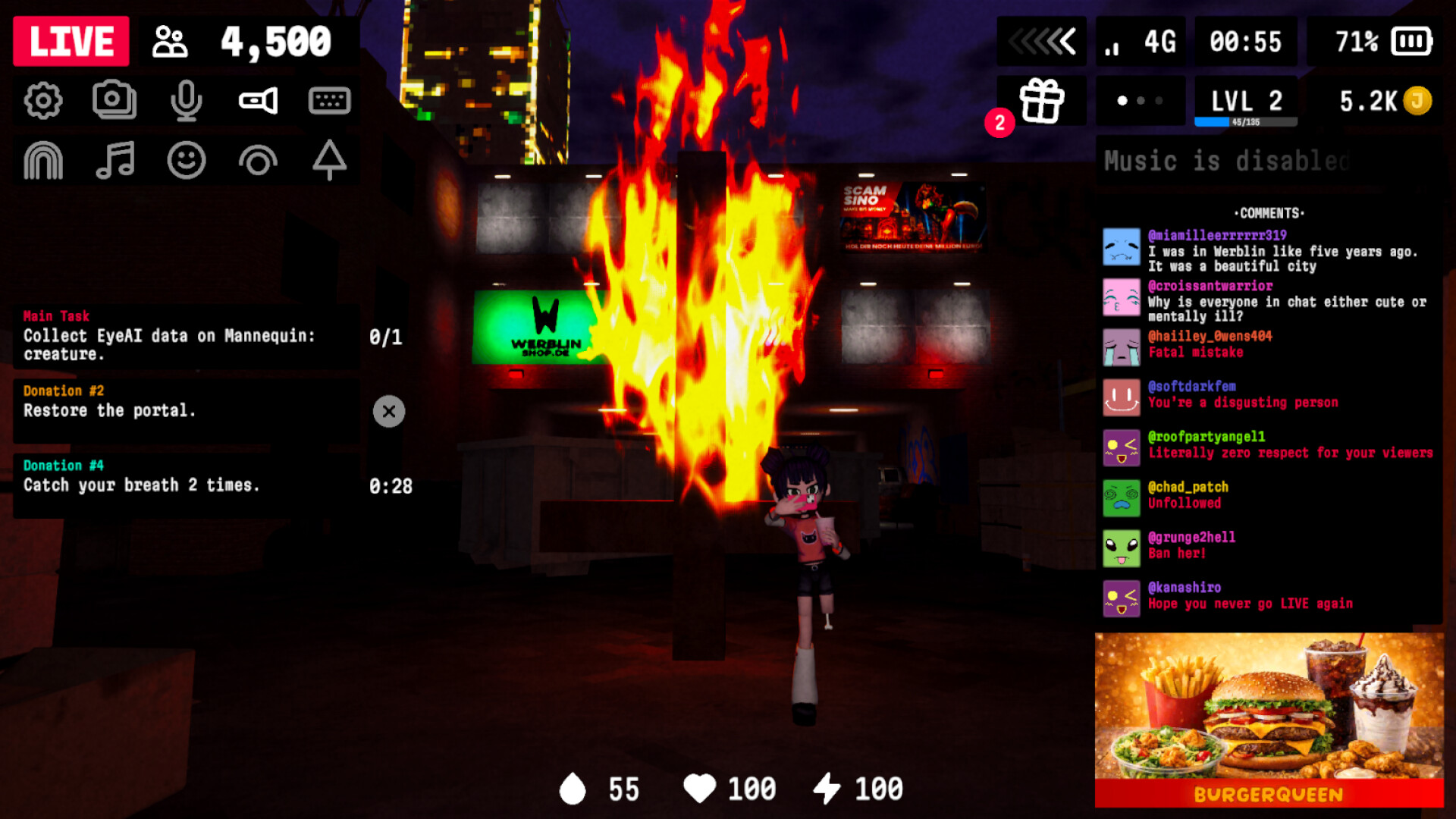
JunkTok released on Steam on August 31, 2026. This hub now routes players into the pages that matter during active play: beginner setup, how to play, five nights, characters, creatures, EyeAI scans, viewer ranking, builds, and achievements.
Beginner Guide
First-run route, five-night goals, EyeAI targets, viewer pressure, and early build discipline.
How To Play
Core loop, scan targets, viewer ranking, and what to record before optimizing.
5 Nights
Monday through Friday tracking for objectives, danger, viewer pressure, and exit conditions.
Co-op Setup
Solo, duo, and trio role splits for scanning, calls, and ranking pressure.
Creatures & EyeAI
Creatures, Slime, Portals, scan evidence, rewards, danger, and timing.
Viewer Ranking
Donation requests, audience gain, ranking pressure, and nightly elimination risk.
Characters & Builds
Character abilities, random perks, upgrades, and run modifiers to record.
Achievements
Achievement support, likely unlock buckets, and current capture fields.
Release Date
Confirmed Steam release date, platform, regional price source, and current availability.
Post-launch verification
What becomes the real wiki first
The strongest search cluster is not the release date. It is the first verified list of characters, perks, creatures, EyeAI scan behavior, viewer ranking rules, and achievement unlocks.
Recently updated
Player guide pages
9 player guide pages are available in the current guide set.
JunkTok: Paranormal Investigators Challenge released Aug. 31, 2026 and is available on Steam for Windows PC. Start with the beginner guide if you are new, then move into characters, perks, creatures, EyeAI scans, viewer ranking, and achievements as exact in-game details are verified.
Quick Start For New Players
If you arrived from a brand search and just need the next action, start with How To Play. That page explains the post-tutorial route: choose a character, check the current perk or upgrade state, read the objective, scan an EyeAI target, watch viewer ranking, and work toward surviving Monday through Friday.
Use Characters, Perks, and Upgrades when a build choice appears, EyeAI Scanning when you need Creature, Slime, or Portal notes, and Viewer Ranking when donation requests or audience pressure start changing the run.
Answer Routes
| Player question | Best page |
|---|---|
| What should I do first after the tutorial? | /how-to-play/ |
| Which build choice should I record? | /characters-perks-upgrades/ |
| What does EyeAI ask me to scan? | /eyeai-scanning/ |
| Why is viewer rank pressure rising? | /viewer-ranking/ |
| What should I do first? | /beginner-guide/ |
| Should I play solo, duo, or trio? | /coop-guide/ |
| Which character, perk, or upgrade matters? | /characters-perks-upgrades/ |
| What do Creatures, Slime, and Portals do? | /eyeai-scanning/ |
| How do viewer ranking and donations work? | /viewer-ranking/ |
| What achievements can I unlock? | /achievements/ |
What Is Confirmed
Steam describes a one-to-three player horror challenge across Monday through Friday. Confirmed public systems include EyeAI scans, Creatures, Slime, Portals, donation requests, viewer ranking, characters with unique abilities, random perks, level-up upgrades, and run modifiers such as zodiac signs, mini-apps, masks, filters, disabilities, dancing, and surveillance cameras.
Verification Queue
The first useful wiki updates should capture exact names and values from the released game. The priority order is characters, perks, creatures, EyeAI scan behavior, viewer ranking rules, achievements, then night-by-night survival changes.
| System | Capture first | Why it matters |
|---|---|---|
| Characters | Name, ability, cooldown or trigger, solo value, co-op role | These can become individual search entities quickly |
| Perks | Starting condition, effect, drawback, best pairing | Players will search for best perks and builds |
| Creatures | Name, location, scan risk, counterplay | Creature names can anchor guide pages |
| Viewer ranking | How audience is gained or lost, donation request effects, elimination rule | This is a distinct player problem, not just flavor text |
| Achievements | Official name, unlock method, hidden status | Completion players need exact data, not guesses |
Source Position
This site separates confirmed Steam wording from values that still need in-game evidence. Exact creature names, perk values, upgrade stats, achievement conditions, and viewer thresholds should stay pending until visible in the game, Steam achievements, official posts, or checkable player evidence.
How To Use The Hub
Use the home page as a routing surface. If you have never played, start with the beginner route and co-op setup. If you already understand the loop, jump straight into the systems that can produce searchable answers: characters, perks, creatures, viewer rank pressure, and achievements. The release-date page now answers availability questions quickly, then moves players back into active play guides.
The practical workflow is simple. Open Steam for the live purchase and regional price state, then use this wiki to decide what to record during the first session. A useful note is not just "perk seems good." A useful note includes the exact perk name, where it appeared, what it changed, whether it helped scanning or survival, and whether it created a tradeoff. The same rule applies to creatures, donation requests, upgrades, and achievement unlocks.
Evidence Links
| Source | Use it for |
|---|---|
| Steam store | Release state, platform, feature wording, language support, achievements |
| Steam Community | Launch posts, player reports, screenshots, discussion clues |
| SteamDB | Store metadata changes, wishlist rank movement, follower trend |
Player Questions To Answer First
The first wave of useful answers should be concrete. Which character is easiest for solo play? Which perk helps a new team survive Monday? What does a Portal scan reward? When do donation requests interrupt a route? What viewer rank is safe at night end? What achievement unlocks during a normal first clear? These are better targets than repeating that the game has EyeAI, co-op, and upgrades.
Failure Modes
- Turning every confirmed store feature into its own page before there is enough in-game evidence.
- Letting several pages share the same source note and recheck paragraph.
- Keeping release-date copy in the hero after players have shifted to how-to-play, builds, creatures, and achievement searches.
- Publishing a "best" recommendation without recording the run context that made it strong.